Begin with the home you want to use
Custom home construction offers an opportunity to plan daily life at the scale of an entire residence. Think about gathering spaces, private rooms, storage, work areas, outdoor connections, and how those needs may evolve. Harry Wright Premier Construction Coto De Caza encourages a brief that describes routines and priorities as well as visual preferences. A striking exterior does not answer every question about comfort or circulation. Consider what should feel open, what should feel private, and which rooms need to connect directly. This information can support the architectural conversation and help the construction scope reflect the intended use of the home rather than a collection of unrelated features.
Let the property inform the planning
A custom residence must respond to the lot where it will be built. Site conditions, access, utilities, drainage, orientation, and applicable requirements can influence the design and construction sequence. Appropriate surveys and specialist assessments should be considered with the professionals responsible for the plans. Confirm the public approval process for the parcel and the proposed residence. In unincorporated Orange County, OC Development Services provides planning, permitting, and inspection information. Association review may also be relevant to a Coto De Caza property. Treat each source of approval as a defined responsibility. Property-specific information is more useful than assuming that a home built elsewhere provides a complete template for your own project.
DESIGN POSSIBILITIES
A different outlook.
A more considered space.
Define who is responsible for each part
A new home can involve architects, engineers, designers, contractors, specialists, suppliers, and the homeowner. Discuss who will coordinate each part of the process and which professional services are included in the agreement. Drawings and specifications should be available at the appropriate stage and reviewed alongside construction planning. Identify how questions or revisions will move between the relevant parties. If a decision affects structure, building systems, or an approved plan, it needs the appropriate review rather than an informal instruction. Clear responsibilities reduce uncertainty about who orders products, obtains approvals, schedules inspections, or confirms a detail. The construction conversation should make those relationships understandable before work begins.
Make selections in a useful sequence
A custom home requires many product and finish decisions, and their timing matters. Windows, doors, appliances, cabinetry, fixtures, and other components may influence dimensions or require lead time. Discuss a selection schedule that reflects the construction sequence and the information needed by the trades. Review samples and specifications with the overall design rather than selecting each room in isolation. Materials should support the maintenance, comfort, and appearance you want. Record approved choices so product substitutions can be evaluated against a clear reference. Early decisions should remain coordinated with the drawings and scope, especially where an attractive product has installation requirements or performance characteristics that affect other parts of the home.
A CLEARER PATH FORWARD
Good decisions
begin before the build.
Bring your priorities, your questions, and what you know about the property. We can discuss the information needed to move your residential project forward.
Understand the stages of residential construction
The exact sequence depends on the property and approved plans, but a new residence involves a series of connected stages. Site preparation, foundation work, structure, enclosure, building systems, interiors, and final completion all rely on preceding work and required checks. Ask how milestones will be defined and how progress will be communicated. A schedule should reflect approvals, conditions, inspections, specialist work, and delivery of critical products. Avoid assuming that the same duration applies to every custom home. If you have a move-in goal, discuss it early and distinguish an intended target from a confirmed contractual arrangement. Understanding dependencies gives you a more useful view of progress than judging only what is visible from outside.
Review investment through drawings and specifications
A meaningful construction proposal needs a defined basis. Drawings, specifications, allowances, exclusions, and known conditions should explain what the proposed amount covers. Compare alternative proposals using the same information. Clarify responsibility for professional services, public fees, site work, utility connections, landscaping, and owner-selected products where relevant. Ask how changes will be priced and documented if the design or conditions change. A contingency discussion should address uncertainty rather than imply that every unknown is already included. Payment milestones should relate to the written agreement and applicable requirements. These questions support an informed decision about the construction scope without relying on a universal price per square foot or an unsupported budget promise.
Think about handover before the final stage
The completion process should be discussed before the end of construction. Ask how remaining items will be reviewed, which required approvals or inspection records will be available, and how product documentation will be organized. A new home contains systems and materials that need appropriate care, so manufacturer information and relevant instructions are useful at handover. Review normal operation of doors, cabinetry, fixtures, and other installed components. Before engaging a contractor, request license information, insurance documentation, and references that can be attributed to actual work. This website does not use invented project counts, awards, or customer testimonials as substitutes for evidence. A substantial residential decision deserves documentation specific to the business and proposed project.
Start a custom home discussion in Coto De Caza
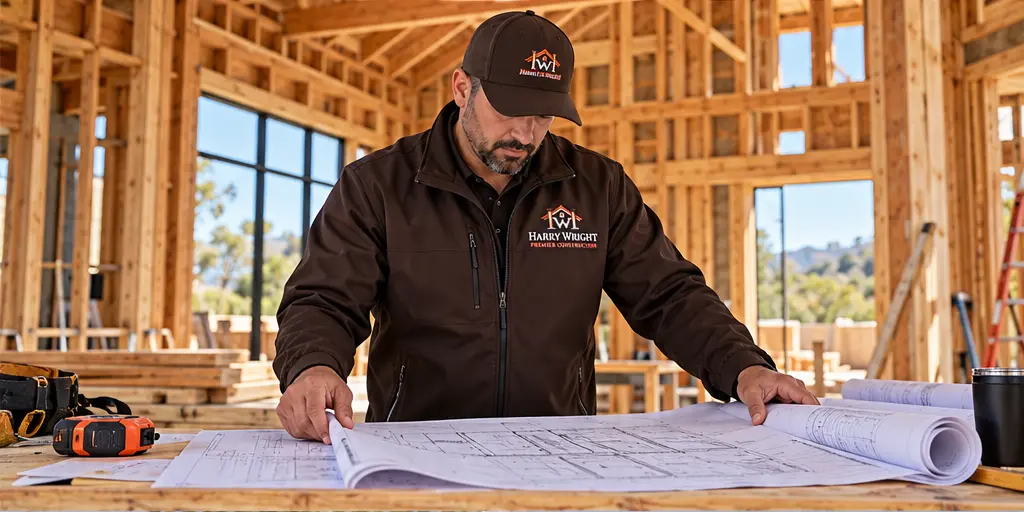
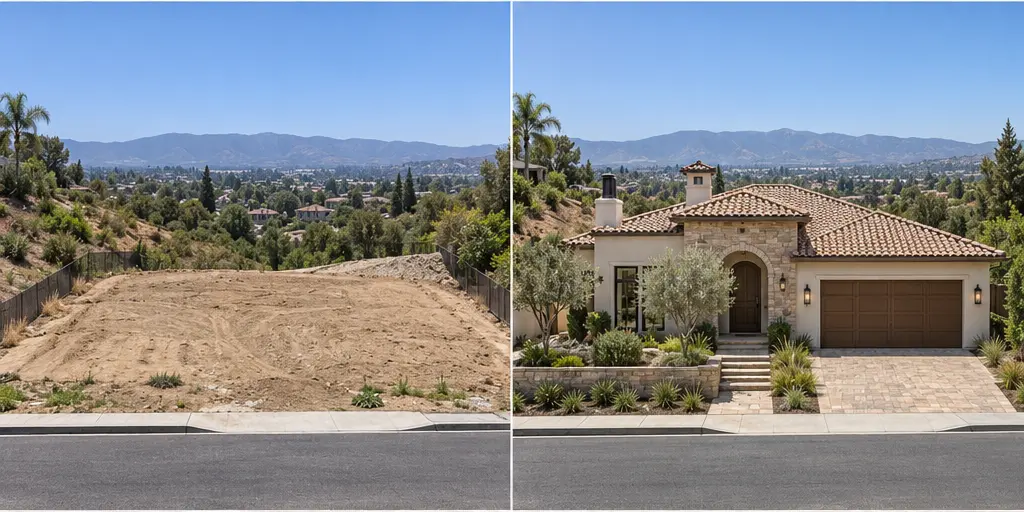
Call (949) 704-6114 to discuss custom home construction in Coto De Caza, CA. Email [email protected] with your planning stage, whether you have a lot or drawings, and the best way to reach you. Business contact hours are 8:00 AM to 8:00 PM daily. The framing scene and before-and-after lot comparison are AI-generated design illustrations and do not depict completed Harry Wright client projects. Use them for a conversation about possibilities while evaluating the proposal through real documentation. If improving an existing residence is your main goal, explore Home Additions and Whole-Home Remodeling to compare those planning paths with building a new home.